







Minister of Communications: Egypt Targets More Than 400 Digital Services by 2030, Expands Data Centers and AI
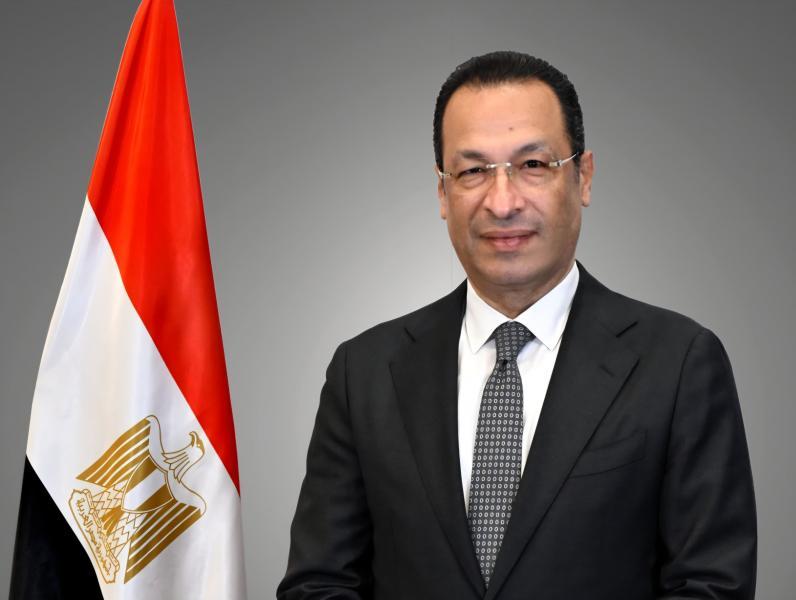

Eng. Raafat Hendy, Minister of Communications and Information Technology, affirmed that Egypt is currently working to build a digital economy capable of creating job opportunities and delivering a qualitative transformation in the services provided to citizens, while strengthening digital sovereignty to protect data and support independent decision-making.
Speaking at the eighth edition of FDC Summit 2026 on Tuesday, the minister said the government is working to provide an integrated remote-access experience for public services, supported by digital identity and electronic signatures, with a target of increasing the number of digital services to more than 400 by 2030.
Hendy explained that the Ministry of Communications and Information Technology (MCIT) continues to implement its programs through the Digital Egypt Innovation Hubs, with a focus on fostering an entrepreneurial mindset, incubating startups, connecting emerging companies with investors, and supporting the growth of Egypt’s innovation and entrepreneurship ecosystem.
From AI Readiness to “Creating Impact”
Hendy said Egypt began the first phase of its national AI strategy by focusing on capacity building and creating the necessary environment for the adoption of AI technologies.
He noted that the efforts implemented so far have contributed, according to figures cited in his speech, to Egypt advancing 59 places in the Global AI Readiness Index and reaching the top position in Africa.
Egypt has now moved into a new phase focused on “creating impact” through the implementation of its National AI Strategy through 2030, he added.
The strategy’s targets include reaching 220 companies and enabling 36% of citizens to use AI-powered tools.
The minister also highlighted “Karnak,” an AI model developed by Egyptian talent and expertise at MCIT’s Applied Innovation Center, as part of the country’s efforts to develop locally built AI applications and models that strengthen digital sovereignty.
MCIT recently launched a pilot version of “Karnak Chat,” an intelligent conversational system built on the Karnak large language model and designed to enhance interaction with the Arabic language, cultural context, and Egyptian identity.
Data Centers: Turning Data Transit into Economic Value
Hendy stressed that realizing Egypt’s ambitions in AI requires access to advanced computing capabilities, noting the government’s growing focus on developing the data center industry as a key pillar of the digital economy.
He explained that these capabilities are essential to maintaining the delivery of government services and meeting the growing requirements of the digital economy amid the rapid expansion of AI and data-driven services.
The minister said 20 submarine cables pass through Egypt, carrying data between Europe and Asia. He explained that the country aims to build on this strategic advantage by developing the data center industry, enabling Egypt to generate greater economic value from the flow of data passing through its territory.
This vision is aligned with MCIT’s efforts to maximize the economic benefits of Egypt’s submarine cable network, increase the country’s capacity to host and process data, and attract global cloud service providers and international technology companies.
The approach also forms part of the ministry’s ongoing work to develop an integrated national strategy for the data center industry.
AI and Quantum Computing Pose New Cybersecurity Challenges
On cybersecurity, Hendy said that the expansion of digital services makes it increasingly important to strengthen the country’s capabilities to address cyber risks, protect data, ensure business continuity, and maintain trust in digital services.
He noted that Egypt is implementing the second edition of its National Cybersecurity Strategy and working to prepare for emerging technological risks and challenges.
The minister pointed out that rapid advances in artificial intelligence and quantum computing are creating new future challenges for data protection and cybersecurity systems.
He stressed that developing national cybersecurity capabilities is proceeding in parallel with the expansion of digital infrastructure, data centers, and electronic services, ensuring that digital transformation advances hand in hand with the protection of data and critical infrastructure.
ICT Sector Among Egypt’s Fastest-Growing Economic Sectors
Hendy affirmed that the ICT sector remains a government priority given its growing contribution to the Egyptian economy.
During his speech, he noted that the sector recorded a growth rate of approximately 24%.
Hendy’s remarks came on the first day of the eighth edition of FDC Summit 2026, which kicked off Tuesday at the Al Manara International Conference Center.
The summit’s agenda focuses on key issues shaping the future of the digital economy, including artificial intelligence, data centers, cybersecurity, digital infrastructure, cloud computing, and data management.

.jpeg "بنك القاهرة 1")

.jpg "بنك ساييب")